
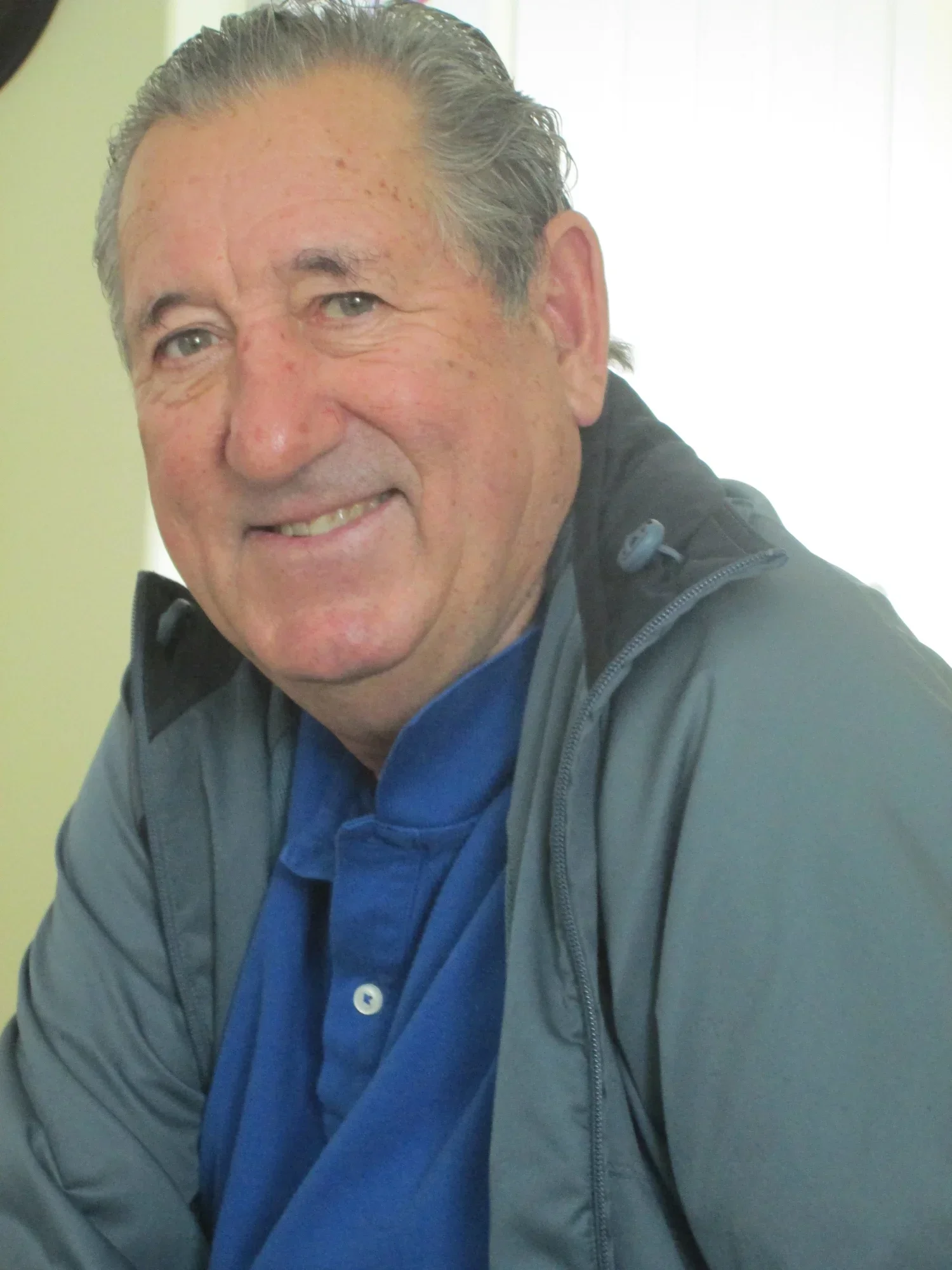
Chuck Bradley, visionary from Marin City. Photo by Steefenie Wicks
By Steefenie Wicks
Jack Tracy notes in his book “Sausalito: Moments in Time” that in 1950, after the turmoil of WWII and the wartime crowds, a quiet had once again settled over Sausalito that had not been experienced in decades. It was during this period that Charles Bradley and his mother were living in what was known as the Flats of Marin City. Built on the flat land, not in the hills, these units had been housing for families and single people who came to work in the shipyards during the war.
Marin City’s Flats were very much integrated, and not limited to just one group. Bradley remembers going to Richardson Bay School, where kids from Marin City and Sausalito shared the school grounds. “It was almost 10 years after the war; folks were just trying to get along,” he continues. “I was lucky because I got to know all of the kids. Later, when I went to Tam High, I would meet kids that I had known in the 2nd, 3rd and 4th grades.” Growing up in Marin City, he never felt any type of hostility toward him or his mom from their black or white neighbors.
He remembered that living near the water gave him a sense of freedom, which he took advantage of when he could by going fishing down by Sausalito Boat and Tackle, now the Trident. Every Thursday night he and his mom would attend the two-for-one movie night at the Golden Gate Theater on Bridgeway. He recalled, “You got two movies for 25 cents. The first was the one that was advertised, then the second one was the surprise. You never knew what it was going to be, a western or Shirley Temple.”
During this time he got to know Sausalito well because he had two different paper routes in town. He delivered the San Rafael News, which later became the IJ, along with a paper that no longer exists, the Sausalito Bulletin. One of his clients then was Sally Stanford, who liked to have her paper delivered to her by hand. When he would come into her restaurant, the Valhalla, she would let him pick two, just two, maraschino cherries, which he looked forward to each day.
He remembered that at the time his mother was working for the Goodwill store, when Goodwill would only hire disabled men and women, whom he found to be really nice people. One man took him aside one day and said, “If you are going to deliver papers you need a bike, so I’ll tell you what I’m going to do.” With that he pulled out an empty clear glass jar. “Each Friday,” he said, “I’ll place a dollar in this jar. You’ll need to match this with your own dollar, and soon you’ll have enough for a bike.” One year later he had a brand-new Schwinn.
In 1963, Bradley joined the Reserves and served six months’ active duty followed by five and a half years of reserve meetings. Eventually, he returned to Sausalito, where he got his training as a journeyman manager working at the Big G Market, now Mollie Stone’s. From there he went on to work at a rental store that had employed him when he was a teenager. As a young man with a vision, he talked the owner of the rental company into selling him the business. He was able to make a down payment with an agreement to pay so much a month. In time he owned the company, which he renamed Big 4 Rents.
He owned and ran this company from 1965 to 1998, when Hertz Equipment Rental offered to buy him out at a price he could not afford to refuse.
After that he devoted himself to container housing. His company, Global Portable Buildings, and its WATERstorz division were designed to help people in times of disaster. He wanted to be able to offer housing when people are flooded out, or when hurricanes or tornadoes strike. He worked with the U.S. government to perfect his designs as emergency units, and the units were tested for their adaptability at Texas Tech. He also worked on water storage, developing a unit that can hold up to 7,000 gallons of water in an approved USDA/FDA-lined container that keeps drinking water fresh.
Even in his 70s, Bradley showed no sign of slowing down. He has always been a bit of a visionary, so when asked what he saw in his future, he remarked, “Lots of tennis and being on my boat. After all, I’m like everyone else; I’m here for the water.”
