
Neil Davis (center, bottom row). Photo by Steefenie Wicks
By Steefenie Wicks
Sausalito has always been known for its local pubs or bars, which catered to the local residents. In the early 1900s there were at least 19 bars located in the downtown area of Sausalito. The most famous of these dated back to 1905; soldiers returning on foot to Fort Baker in the early hours of the morning called it “The Last Chance Saloon.”
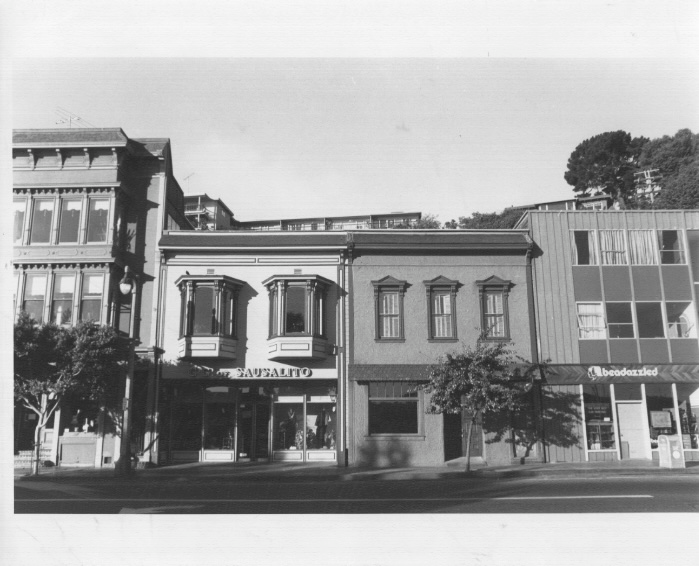
From 1959 to 1974 Neil Davis owned and ran a saloon in Sausalito that was involved in charities and political movements, adopted orphans, and hosted local fundraisers and press conferences. His establishment poured the highest-quality drinks at the lowest possible prices; it was a literary center that seemed to house the local writers of the era: “The No Name Bar.”
Born in Anderson, Indiana, Neil Davis is known for establishing one of the most unique local bars in Sausalito, one that in the beginning catered to locals along with some of the world’s most talented literary authors. Davis will be the first to tell you that the thing that made the No Name so popular was its setting. Located in beautiful downtown Sausalito, it became everybody’s living room, with no TV but plenty of magazines from around the world. At any time of the day you could drop into the place and find just about every customer reading either the Village Voice, the local sailing magazine, the English version of the Russian magazines, or National Geographic. Neil also started his own little newspaper that told stories of who was doing what, along with who was where.
After being discharged from the Air Force, Davis wanted to be a painter. He began coming to the Sausalito studio of local artist Serge Trubach, who would critique his work. During this time, he was invited to attend a party at a little house located behind the old Alta Mira Hotel. There he ran into an old friend who offered him a chance to change his life’s plan.
His old friend had become partners with four other men who were going to take over the old bar Herb's, located on Bridgeway, planning to turn it into a bar that was different from all the others. His friend offered him a job doing day labor, tearing out the old place so that it could be remodeled, so for $5 an hour he took on the job of gutting the interior. The bar became a thing of beauty, designed by architect Warren Callister of Tiburon with his assistant Bobby Holmes, who took over running the job.
Work began on the bar, but the partners could never decide on a name. Eventually the partners could not even work together; about four years and a lot of money into this project, the partnership broke up. Davis was offered the bar, and he decided to take the project on. He is the first to tell you that he had no experience in running a bar or being a bartender, but these were things he would learn. He insisted that all of the bartenders wear white shirts and black ties; that was their uniform.
One of his first decisions was to let it remain the bar with no name, or the No Name Bar. Along with hiring two of his friends as bartenders, he took on working with them. He learned how to mix drinks by referring to small recipe cards that the previous owners had made up. Word started to spread about this new little bar with its magazines, inexpensive drinks and quiet atmosphere. It soon became a hangout for local writers who appreciated the environment. The night crowd from San Francisco started to show up, and before Davis knew it, his little bar with no name had become the in spot. Locals like writer Evan Connell, adventurer and film star Sterling Hayden, and sailor Spike Africa became regulars, helping build the reputation of the bar as the place to be or be seen. Then a No Name Bar opened in Spain, making this local spot world famous.
Davis will tell you that in the beginning it was the rich bohemian community that helped get the No Name Bar started. Families that shopped downtown made a habit of stopping in for a quiet drink in the evenings or on a Saturday night date, leading to the success of the bar.
He feels that once real estate values changed, the local shops that catered to residents were bought out, more tourist shops moved in, and then his clientele changed, which would change the atmosphere of the No Name Bar forever.
