
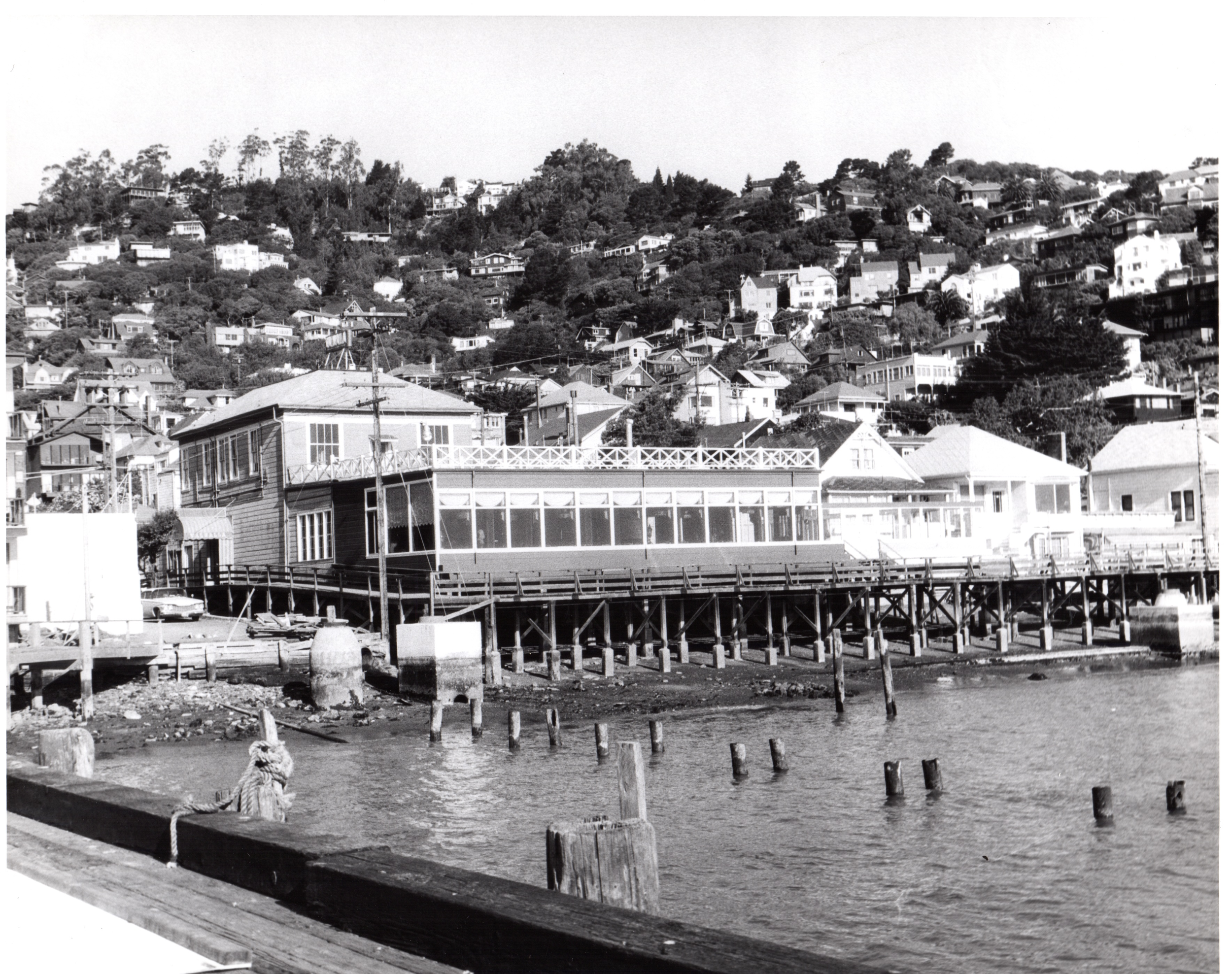
Aerial view of Sausalito
Transcript
Jack Stauffacher, interviewed by Betsy Stroman | March 13th, 2008 | Temporal Coverage: 1930 to 2008
Betsy Stroman: You were saying, during the most civilized days or something, before the Beats, or the Vogue.
Jack Stauffacher: Yeah, because I think, since I've been around for so long here, in and out of San Francisco, but I've spent some time in Europe and the East, the people that you're mentioning, you first mentioned Martin Mattel, and I knew him through, I call it the Renaissance period after the war. Soldiers coming back and going on their adventure, their dreams, in terms of artists, poets, writers. They seemed to kind of converge here in San Francisco as they passed through during the war, and they thought it was a nice place. So, in a sense, they came back to remake the world. Martin Mattel came from Chicago. At that time, he was involved with Moholy-Nagy.
Jack Stauffacher: What's her name, Sybil Moholy-Nagy, yeah, they were kind of together. They had an affair, and they were together.
Betsy Stroman: You know all this?
Jack Stauffacher: I know some of it, so I'm not going to, I'm just going to mention that's how I got to know him. And he did have a wife and a nice little child, and they lived in society.
Betsy Stroman: You met him in Sausalito?
Jack Stauffacher: Okay, with his family. And so, Frank, and what's her name, Sybil, Sybil. We all became friends, and we'd go to her house. I think we were just gathering together and talking about all the artists, and the whole spirit of what was happening in the house. I'd like to look for something, guys, I'm sorry.
Betsy Stroman: That's all right.
Jack Stauffacher: And so that's how I met him, that's not really where Martin Mattel comes into it. I did know him a little bit better after all those periods of change, but then I lost track of him, so I don't know exactly what happened to him.
Betsy Stroman: He was just a name that I bumped into in Sausalito several times, and I could never find any reference to him outside of that, so I was always curious what his claim to fame was.
Jack Stauffacher: Well, I mean, he was a very smart guy, a very good-looking guy, with a nice gaze on him, but I don't know that much about him.
Betsy Stroman: Okay, well, that's not important.
Jack Stauffacher: Varda is a little more in my memory, because he was a person I met, actually, in Monterey.
Betsy Stroman: Oh, okay.
Jack Stauffacher: Before he came up to live here. My meeting with him was through, maybe it was Henry Miller, I think that was it, because I was a good friend of Henry Miller's, I did some publications with him. But I remember I rode my bicycle down from San Mateo to Monterey and stayed with Varda. He was a real spirit. Maybe you remember him?
Betsy Stroman: No, I don't remember Varda. I was working...
Jack Stauffacher: Eventually, we went over to Sausalito, to the Vallejo ferry boat, and that's how we came to know that whole story, with Gordon Onslow Ford. We were always friends, he was just part of our group, and his ideas, and his collage work, he was a really important part of the movement at the time. I don't know what I can say about it, I don't know what's already been said.
Betsy Stroman: I'm just trying to collect impressions, and yours are as valuable as anybody's. Did you go on the Sunday sails out on his sailboat?
Jack Stauffacher: Oh, many times, many times.
Betsy Stroman: Okay, do you think you could give me some recollection of that?
Jack Stauffacher: Well, I think there were different periods to his sailing adventures on the bay. In the earlier part, I think they were more pure, meaning there were closer friends on the boat, the social connection was tighter, there weren't a lot of hangers-on, as there turned out to be later on. That didn't sit as well with me, because those people weren't on the same level of ideas. Varda could speak well, he could describe things, he kept it all going. But later on he gathered a whole kind of social crowd around him, hanging on him as a kind of artist figure. We didn't think of ourselves that way, it was a more normal, natural environment.
Jack Stauffacher: Alan Watts comes into the picture after a while too, I think he and I were good friends of his.
Betsy Stroman: You were good friends of Alan Watts, yeah.
Jack Stauffacher: He lived next door, or not next door, but in the valley where I lived, with her. And there was a fellow, now dead, who used to live, my memory's getting a little batty, he used to live in Half Moon Bay, he was a painter, and he lived for years in Sausalito. You know who I'm talking about?
Betsy Stroman: But he wasn't a painter?
Jack Stauffacher: He was a painter.
Betsy Stroman: And he lived with a painter?
Jack Stauffacher: No, no, I'm talking about this man, who, to make a living, worked as a barber.
Betsy Stroman: I have no idea, I've never heard of this fellow.
Jack Stauffacher: Oh, well, he's very important. The name right now is... I just can't remember.
Betsy Stroman: So he made his living as a barber?
Jack Stauffacher: Yeah, but later he became a resident of Half Moon Bay, out in the country, and his wife is still alive. Maybe you should meet her, she knows a lot about the Sausalito period.
Betsy Stroman: I don't think they knew each other then, but he must have some background from that period. This is a mystery to me, I don't know how I'll ever find out who this is.
Jack Stauffacher: Oh, I'll find out.
Betsy Stroman: Okay. And then, what was the other person? I don't know who else I mentioned, but there are a number of people.
Jack Stauffacher: Byrne Porter was somebody that I...
Betsy Stroman: Yeah, Byrne Porter.
Jack Stauffacher: I did books for him.
Betsy Stroman: Did you do the... he did a book on the Sausalito Six, some etchings that they'd done.
Jack Stauffacher: No, I don't think I did that one.
Betsy Stroman: You weren't involved with that. What did you do for him?
Jack Stauffacher: I did a Henry Miller miscellany, because he was publishing a lot of Henry Miller.
Betsy Stroman: When you say he was publishing, what did that mean, were you doing the printing?
Jack Stauffacher: No, no, I would do specific books he asked me to do, like this Henry Miller miscellany. I also published another book myself, and that wasn't with Byrne Porter. Byrne Porter was also, not editor exactly, but sort of the second part of Circle.
Betsy Stroman: Right, I know you had a connection with Circle.
Jack Stauffacher: Well, I printed the first two issues.
Betsy Stroman: Okay, okay.
Jack Stauffacher: I don't remember which ones, but I have the complete set of Circle issues on my desk, they're rather interesting.
Betsy Stroman: They are very interesting, they're kind of amazing.
Jack Stauffacher: Yeah. What was his name, Leite, George Leite?
Jack Stauffacher: Leite, L, E, I, T, E.
Betsy Stroman: I don't know how you pronounce it. No, actually, I was reading your Smithsonian interview, and I think he's mentioned in it. Do you remember doing that interview, with Paul Carlstrom?
Jack Stauffacher: I do remember, I did. But George Leite, a strange man. Where do you get this?
Betsy Stroman: I read it, and I don't want to take a lot of your time, I know you're busy, but I just thought there might be some little personal tidbits I could get from you.
Jack Stauffacher: Well, see, that's... I'm not going to guarantee that.
Betsy Stroman: You don't have to guarantee me anything. Let's stay centrally on Sausalito.
Jack Stauffacher: That's what... all right.
Betsy Stroman: Let me ask you a more specific, I mean a more general question. Victor de Suvero wrote something, and he always spoke to me as if Sausalito were part of, he said, an axis, when the axis was North Beach and Sausalito, and sometimes he said a triangle, North Beach, Sausalito, and Kenneth Rexroth's apartment. My impression was that everybody just sort of moved from one to the other.
Jack Stauffacher: Well, I mean, I wouldn't say it's stretching it, but Sausalito was sort of the more exotic, away from the big city, kind of Italian town, on the boats and all that, like going to the Italian Riviera if you were in Paris. Yeah, it was a kind of very beautiful place. Artists gravitated there, it was part of the ambiance, we didn't feel disconnected at all.
Betsy Stroman: When you were there.
Jack Stauffacher: Yeah. So people who lived in Mill Valley, the artists, the writers, Sausalito, it was all part of the network. It wasn't, I'm a Sausalito guy, or, what are you, I'm from North Beach, no, it wasn't that way at all. It was the whole Bay Area's people who wanted to meet each other, wanted to see each other, talk to each other.
Betsy Stroman: So the boat trips with Varda were always full of fun?
Jack Stauffacher: He brought this sense of the Greek islands to it.
Betsy Stroman: Was it Tiburon?
Jack Stauffacher: No.
Betsy Stroman: Belvedere?
Jack Stauffacher: No, Angel Island, Angel Island was the Greek island. Let me make sure this is working. Okay. So, with Varda's imagination and his rich fantasy about things, we were all attracted, and vice versa. He loved young people around him, and he liked young girls, so we were always happy to be in his space. That also overflowed into the spirit of Sausalito, because there were a lot of artists there, houseboats. So that's been going on for, half a century.
Betsy Stroman: Half a century, yeah.
Jack Stauffacher: So the tradition isn't something that just came out of nowhere. Today, Sausalito has an artistic, creative history, maybe going back even to when Jack London used to stop over there.
Betsy Stroman: Writing The Sea-Wolf, supposedly.
Jack Stauffacher: Yeah, maybe The Sea-Wolf. And the ferry boats. I remember Sausalito as a kind of departure point, it went to San Francisco before the bridge.
Betsy Stroman: Oh, because you were living in the Bay Area, so you'd come over there.
Jack Stauffacher: I remember when I was up in the Napa Valley, coming back, or you had a friend who took the ferry boat back. There was something I was going to say about the ferry boat, the relationship is very important. I feel as if I grab at the past, and it kind of fades out when I think about it, like when you wake up and you've dreamed about something.
Betsy Stroman: To grab it.
Jack Stauffacher: I want to try to grab it. I did that this morning, I had a good dream, and I just caught the edge of it, and then it just vanished.
Betsy Stroman: So you have no idea.
Jack Stauffacher: I don't know, it might come back in some weird way, I don't know. But the point is, when Gordon Onslow Ford and Watts got together...
Jack Stauffacher: Well, Watts came back later, but Gordon left. Gordon's been an old friend of mine for many, many years, Julie. He was...
Betsy Stroman: I'm trying to remember how you met him. You met him through Henry Miller?
Jack Stauffacher: No, I met him through his wife.
Betsy Stroman: Oh, that's right, on the bus.
Jack Stauffacher: Yeah.
Betsy Stroman: That was so coincidental, that was amazing.
Jack Stauffacher: And we became friends for a lifetime. He also brought a very magical mood to the group. My friend, Dean Mulligan, who I met in the Army, I invited him to stay with me in San Mateo and all that, Sausalito.
Betsy Stroman: Can I ask you one question that's a little bit odd? You said something, in your interview with Paul Carlstrom, about why the Dynaton never took off, and maybe it was because they were European, and that was the great era of American art, and Clyfford Still was, you know, everybody was sort of dumping on anything that wasn't American, and I've been...
Jack Stauffacher: Did I say that?
Betsy Stroman: Yeah, you said something like that.
Betsy Stroman: Does that sound unlike you?
Jack Stauffacher: Yeah, maybe that should be a little... well, maybe that was...
Betsy Stroman: Was that the question that was asked?
Betsy Stroman: No, I think you said something like that. Somebody was wondering why the Dynaton made as little impression as it did, and why it wasn't lasting.
Jack Stauffacher: Well, there's some truth to that.
Betsy Stroman: Oh, yeah. No, and I think you said that, but I won't try to find it.
Jack Stauffacher: That's all right, don't worry.
Betsy Stroman: But what I'm wondering is, Varda never really made it in any big way in the art world, he sort of had a cult reputation locally, but it didn't seem to be mainly for his art, it was mainly for his life and his presence in the world. I was just wondering whether it was that he was out of the mainstream in his art, and whether that...
Jack Stauffacher: No, I think if you look at the so-called mainstream of the thirties and the twenties, the WPA, that whole period, this area was pretty cut off from those kinds of pressures. Basically it was a sort of culture that was pastiche. There wasn't a deep culture of art, there was more romantic influence from the English, and possibly a little from the French. There were only a few people who would read the great writers, that just didn't exist. I think that was a desert. And here were these intellectual artists talking about the surrealists, the futurists, getting all excited. So there was no deeper culture, it was a desert, in a sense. Not like it is now, of course, but we're talking about almost a hundred years ago.
Betsy Stroman: But I mean, there was some kind of cultural excitement.
Jack Stauffacher: Oh, Diego Rivera.
Betsy Stroman: No, no, no, I was thinking later on, after the war, when Clyfford Still came, and all the abstract expressionists were causing great, great excitement. That's the era when Gordon Onslow Ford really didn't catch on, and Varda didn't catch on, and I'm out here, and I'm just sort of...
Jack Stauffacher: Well, you know...
Betsy Stroman: I was wondering whether it was because of their European roots and their...
Jack Stauffacher: No, I think, as I look at it now, I was more seduced by the European spirit. Clyfford and those guys were so full of themselves, they wouldn't speak to you if they didn't like what you were doing. There were California art snobs too, I think. And I knew Clyfford, I did his first catalog.
Betsy Stroman: Oh, no kidding, you did?
Jack Stauffacher: Albright-Knox Gallery.
Betsy Stroman: Oh, Albright-Knox? Which one is that?
Jack Stauffacher: Yeah, Knox. I remember somebody told me, I said, how the hell did he get famous? Don't you know, it's a trick, all artists have tricks in their pocket. He said, no. He played the mystery man, he'd turn away museum directors, saying, I don't want to show my work, and he built a reputation that way. He would only do solo exhibitions, he didn't want to show with anybody else. And the museum in Buffalo said, we'd like to have a show, and Clyfford, I think, sort of liked that, and that was the beginning. I did that first catalog, that was in Buffalo.
Betsy Stroman: Okay.
Jack Stauffacher: And that was, I was living then in...
Betsy Stroman: I see. And had he come out here and gone back after?
Jack Stauffacher: No, he'd come out here. He had come, but then he went east and then came back, I can't remember, he was in New York for a little bit.
Jack Stauffacher: He was a very stubborn guy.
Betsy Stroman: That doesn't mean the artists who followed him were the same way, they were different, of course.
Jack Stauffacher: But, you know, the art world, as I look back now and read the papers, there's a lot of tenuous nonsense. I mean, there's so much value put on, I don't know, overdoing it, and I've met them all, I've done catalogs for them. They've got egos, they levitate, they're so full of themselves, it's like professors at universities, not all professors, of course, but they're all trying to make sure they have their tenure. I was an art director at Stanford University Press, and a lot of the artists of that period came and got good jobs there.
Betsy Stroman: At Stanford?
Jack Stauffacher: At Stanford, yeah.
Betsy Stroman: We're getting a little far afield, that's okay. What about, you did Victor's first book of poetry, I think?
Jack Stauffacher: Yeah. You've seen that?
Betsy Stroman: No, I haven't, I just read somewhere that he had done that.
Jack Stauffacher: Well, I might have it here, I'm sure it's... How did you get to know him?
Jack Stauffacher: Oh, that was through my wife's family, his father and mother were Italian.
Betsy Stroman: So Josephine's father was Italian?
Jack Stauffacher: Yeah.
Betsy Stroman: Oh, I see, they knew each other.
Jack Stauffacher: Yeah.
Betsy Stroman: Did you go to any of the masques, those costume parties Victor wrote?
Jack Stauffacher: I might have, I can't remember. No, I don't think so. I know he opened up a little restaurant here on Broadway, kind of a soup restaurant.
Betsy Stroman: Oh, I didn't know that, I should mention that to him. What era was that, the fifties?
Jack Stauffacher: Yeah, the fifties.
Betsy Stroman: I haven't heard about that. What about George Hitchcock, did you have any connections with him?
Jack Stauffacher: I didn't have much connection with him here, but he came down, I taught for some time, not a short time, at the University of California at Santa Cruz in the seventies, and he was in theater there. We always had a nice chat, he always produced some very interesting books and things, and I always enjoyed him.
Betsy Stroman: Did you print or publish any of his books?
Jack Stauffacher: No, I didn't.
Betsy Stroman: Okay. And you taught at the California School of Fine Arts, didn't you, at some point?
Jack Stauffacher: Well, now it's called...
Betsy Stroman: Yeah, the Art Institute.
Jack Stauffacher: Yeah, I taught there for some years.
Betsy Stroman: In the sixties.
Jack Stauffacher: In the sixties, okay.
Betsy Stroman: And were you ever in Byrne Porter's Contemporary Gallery in Sausalito?
Jack Stauffacher: No.
Betsy Stroman: There was a real character there who wrote an article in Circle Magazine.
Jack Stauffacher: Oh, Edwin Verbeck?
Betsy Stroman: Yeah, tell me about him.
Jack Stauffacher: He's a real mystery man to me. An extremely funny guy, very tasteful, very funny voice. He was just a nice guy, he collected antiques, sold antiques.
Betsy Stroman: And this place he had over the bay there, it sounds like it was beautiful.
Jack Stauffacher: It was beautiful, it was the castle by the sea, I think.
Betsy Stroman: I think your brother rented space there at some point too, I think they lived there together for a while.
Betsy Stroman: Did Verbeck own that?
Jack Stauffacher: No, no, he owned the back of it.
Betsy Stroman: Bobby told me he was her landlord, but I happen to know, from living in Sausalito, the woman whose family has owned that building for close to a hundred years. She said Rebecca never owned anything.
Jack Stauffacher: No, no, that's true, that's the truth, she got a little mixed up there.
Betsy Stroman: So anyway, Rebecca, we looked it up in the phone book, and his name was at that address, two different addresses right there.
Jack Stauffacher: I think the building has several addresses.
Betsy Stroman: So he was renting that space that looked out on the water for a while, I guess.
Jack Stauffacher: Yeah, beautiful site. And Mattel lived there for a while too, and had a studio with a woman named Mary Lindheim.
Betsy Stroman: I knew her.
Jack Stauffacher: Oh, you knew her, too?
Betsy Stroman: Did you know her, too? I've been trying to track her, she died, too, while I was trying to find out about her. She was a very beautiful woman, too.
Jack Stauffacher: Was she? I got some films, 16-millimeter, black and white. She had a house way out in Forest Knolls, and I have some films I took, I lived out there for a while when I was still a kid.
Jack Stauffacher: And there's a picture of Martin there, Martin Mattel.
Betsy Stroman: Oh, really? Out in Forest Knolls? How funny.
Betsy Stroman: Because I found a picture in a magazine of them from about 1955, and they both had studios in that same space, looking out on the water.
Jack Stauffacher: So that building had a lot of interesting people. Then there was a fellow who was part of my life, a real Sausalito man, he used to be director of the Mechanics Institute.
Betsy Stroman: Oh, who was that?
Jack Stauffacher: Very nice man, I'm a little bit keen on him, I was just looking him up today. Yeah, I just wanted to show you, I see, and also Adrian Wilson, my, huh, Original Poems, this is a book my friend Adrian Wilson printed. This is beautiful, this isn't printed, this is done by hand.
Betsy Stroman: That's original, that's gorgeous.
Jack Stauffacher: Oh, for heaven's sakes.
Jack Stauffacher: Now, Weldon Kees, I think that was his...
Betsy Stroman: Well, I mean, there might be poems about Sausalito there. I'm trying to remember what his connection with Sausalito was.
Jack Stauffacher: He was part of the group, for sure.
Betsy Stroman: Now, John Stump was the...
Jack Stauffacher: Oh, was he an architect?
Betsy Stroman: Wasn't he a...?
Jack Stauffacher: No, his brother was.
Betsy Stroman: Oh, his brother.
Jack Stauffacher: He was the head librarian of the Mechanics.
Betsy Stroman: That's right, oh, the Mechanics Institute, okay.
Jack Stauffacher: So there's, the house they lived in is one of those nice overlooking houses, you've seen it, haven't you?
Betsy Stroman: It was on Harrison, and some friends of mine bought it a few years ago.
Jack Stauffacher: Oh, really? And they've redone it.
Betsy Stroman: Yeah.
Jack Stauffacher: So there's John, I'm going to include this in my press work.
Betsy Stroman: Oh, for heaven's sakes, how interesting. Where is it? There he is, in the back, that guy?
Jack Stauffacher: This is my brother.
Betsy Stroman: Oh, that looks like Frank, yeah, yeah.
Jack Stauffacher: And does she know who this is?
Betsy Stroman: No.
Jack Stauffacher: She, what's her name here, Florence?
Jack Stauffacher: Florence Allen. She was the greatest model for artists.
Betsy Stroman: I can't place her, I can't remember her.
Jack Stauffacher: Well, write her name down, I'm sure of it, Florence Allen.
Betsy Stroman: Because there must have been some stories about her, or she's been recorded somewhere.
Betsy Stroman: Yeah, I'll check that out. Because she could talk about Sausalito, because she modeled in Sausalito.
Jack Stauffacher: She modeled all over.
Betsy Stroman: Everywhere.
Jack Stauffacher: Yeah.
Betsy Stroman: Let's see now, who else? Frank, and is this you?
Jack Stauffacher: That's me.
Betsy Stroman: Oh, for heaven's sake. And that over there is?
Jack Stauffacher: John.
Betsy Stroman: John Stump, okay. And he was the librarian at the Mechanics Institute?
Jack Stauffacher: No, not the librarian. Did you say that?
Betsy Stroman: Oh, no. He was the...
Jack Stauffacher: He ran it.
Betsy Stroman: Ran the... okay. And he was a friend of yours there.
Jack Stauffacher: Oh, very good friend, good friend.
Betsy Stroman: Okay, now, this book here is...
Jack Stauffacher: Let's see what book it is. Well, it's a very important book for me, because I put it together. It's the history...
Betsy Stroman: Oh, The History of the Greenwood Press.
Jack Stauffacher: That's a very important book, yes.
Betsy Stroman: I mean, look at, it's got everything in here, almost three hundred pages or more.
Jack Stauffacher: And...
Betsy Stroman: It's beautiful.
Jack Stauffacher: And here's a letter, a postcard from Henry.
Betsy Stroman: I saw something else. Okay, that's gorgeous. Is this available?
Jack Stauffacher: It's all sold out, I think. You might find copies somewhere. It's a fabulous book, a kind of special book.
Jack Stauffacher: And then this, maybe you've seen this, this is rather interesting, this is a little book, and it's almost by Ralph.
Betsy Stroman: Oh, okay.
Betsy Stroman: Oh, there, I've seen that picture. Yes. Is that you?
Jack Stauffacher: Yes, I've seen that somewhere, yeah.
Jack Stauffacher: Oh, my goodness, and there's my brother Frank. And this is pictures from the film. Anyway, this is...
Betsy Stroman: Now, there might have been some kind of publication printed in Sausalito like this, you know, avant-garde.
Jack Stauffacher: What's that? Festina lente, that means hurry up slowly, that's Latin, that's my bookplate.
Betsy Stroman: Oh, that's your bookplate, okay.
Jack Stauffacher: So this one's called Spiral.
Betsy Stroman: Okay, and it's published by you?
Jack Stauffacher: Oh, no, no, no.
Betsy Stroman: No, no, no, oh, that's just your bookplate, okay.
Jack Stauffacher: I just wanted to show you.
Betsy Stroman: Well, this is not a recent book.
Jack Stauffacher: This is a recent book, from '84, I see.
Betsy Stroman: Yeah, that's it, yeah, yeah.
Jack Stauffacher: And it just happens to have these pictures in it.
Jack Stauffacher: Yeah, that's the reason I showed it to you.
Betsy Stroman: How interesting. You know, I'm really grateful to you for doing this, I started having second thoughts, thinking I really shouldn't be bothering you, but I am glad that I did it.
Jack Stauffacher: I just have to get something finished before five.
Betsy Stroman: Do it.
Jack Stauffacher: Okay.
Betsy Stroman: I think, let's see, Harry Partch, did you ever meet him? He was a musician.
Jack Stauffacher: Oh, yeah, yeah. He was a very close friend of Gordon's.
Betsy Stroman: Right, right.
Jack Stauffacher: Yeah, and I have a great picture of him. Right, in that chair.
Betsy Stroman: You have a picture of him in this chair?
Jack Stauffacher: Yeah.
Betsy Stroman: Where?
Jack Stauffacher: Well, I can't...
Betsy Stroman: You can't put your hand on it.
Jack Stauffacher: I have it. But I have it.
Betsy Stroman: That's interesting.
Betsy Stroman: Because he was in this office or something?
Jack Stauffacher: Yeah.
Betsy Stroman: They were friends.
Jack Stauffacher: There must be a lot of artists and people who lived in Sausalito that I'm forgetting who are important. But looking back now, with Frank's film of Sausalito, which was sort of the mood of that moment, it's a different place now.
Betsy Stroman: Oh, yeah. How long have you lived there?
Jack Stauffacher: I've lived there, I think, eighteen years or something. Frank had a comment somewhere, and I won't... anyway, he said he was trying to avoid the cuteness of Sausalito, or something, in that movie, and I sort of...
Betsy Stroman: Oh, there's that picture, that's right.
Jack Stauffacher: Yeah, that's...
Betsy Stroman: That's the picture, yeah, yeah.
Jack Stauffacher: Now, I was sort of trying to figure out what he meant by that, and what he was...
Betsy Stroman: Well, it's like the cuteness of Carmel. But it wasn't really like that, was it, then, in the forties?
Jack Stauffacher: I don't know, I mean, I was surprised anybody thought of it that way in the forties. But, well, you know, Sausalito, at its northern end, there was a huge boatyard, right, so it brought Marin City and all those people, but I don't know how they filtered into the town itself.
Betsy Stroman: Maybe they did, or maybe just the outskirts of it.
Jack Stauffacher: Well, they must have come to town, because that would be the only place to go shopping.
Betsy Stroman: You have a lot of information on that, don't you?
Jack Stauffacher: Oh, on Marinship? Oh, yeah, that's well documented.
Betsy Stroman: Now, you're doing a general history?
Jack Stauffacher: No, I'm just trying to do the arts.
Betsy Stroman: Oh, the arts, woo!
Jack Stauffacher: Yeah, yeah, so, which is a big topic, and I, you know.
